After coming for the first time in the summer of 2022 and after deciding we wanted to move here, we though it will be a good idea to return at some point during the winter months to experienced the winter here in Ponte de Lima.
So we came back and spent Christmas break that year.
It was cold of course but very, very manageable. As a mater of fact I liked because it reminded me of the weather in my native country (Colombia).
Well… I have to say that experience was very deceiving. That or definetely the climate all over the world is changing drastically with Portugal being no exception.
At the time I’m writing this post: February 2026 its being raining almost every single day for the past month.
Our lemmons keep falling from the tree completly rotten due to the humidity and moldy green spots are growing everywhere!
One of the first appliances we bought was a dehumidifier. It is a MUST when living here along with a drier because Its almost imposible to dry clothes by just hanging them!.
The Floods in Ponte de Lima
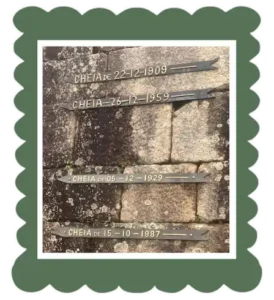
When you are walking through the historic town centre of Ponte de Lima, it’s impossible not to notice the marks that time — and water — have left behind. On the wall of Tower of St. Paul, on the side facing Postigos Street, there is a Gothic inscription that quietly tells a dramatic story: “here the river reached.”
It’s a simple phrase, but it carries the weight of centuries of flooding caused by the Lima River, which runs through the heart of the town and has shaped its history as much as its beauty.
Throughout the old town, you can also find markers showing the water levels of different floods that have affected the vila over the years. Among them, the flood of 1909 stands out as one of the most severe ever recorded in Ponte de Lima. Historical accounts describe how heavy rainfall caused the Lima River to overflow dramatically, flooding streets, homes, and farmland, and leaving a lasting imprint on the community’s memory.
Flooding in Ponte de Lima is not a rare event. Due to its location in the fertile Lima valley and its proximity to the river, periods of intense rainfall — especially during the winter months — have repeatedly led to rising water levels. In more recent decades, floods in northern Portugal, including the Minho region, have been linked to Atlantic weather systems bringing prolonged rain, sometimes combined with high tides that slow the river’s flow into the sea.
Even today, locals keep a close eye on the river during stormy seasons. While modern flood management and monitoring systems have improved response times and reduced damage, the historical centre still bears visible reminders of past events — carved in stone, marked on walls, and remembered in stories passed down through generations.
Walking these streets, you realise that these inscriptions and flood marks are more than historical curiosities. They are warnings, memories, and a testament to the enduring relationship between Ponte de Lima and the river that both sustains and threatens it